
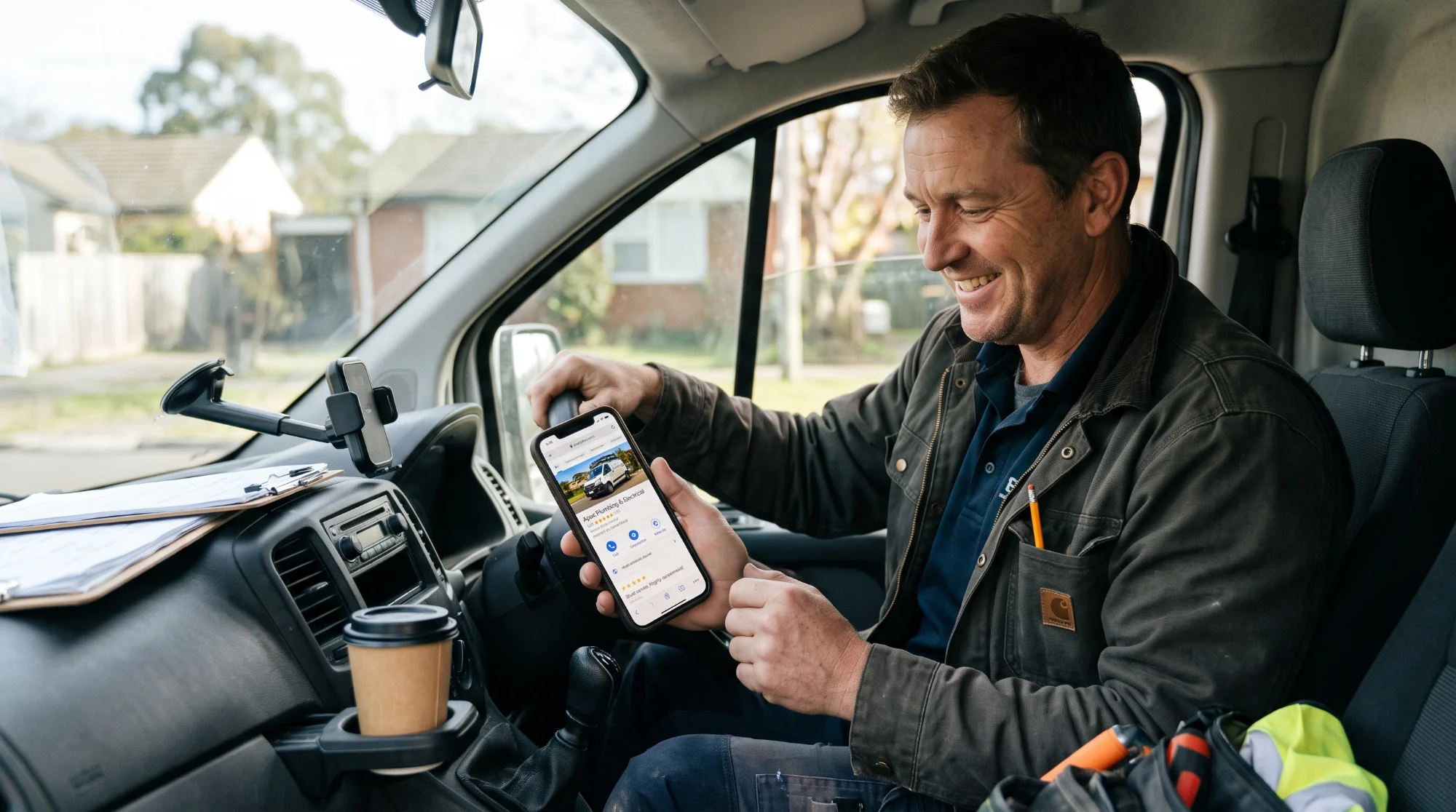
When a boiler breaks or a fuse box trips, most people pick up their phone and search something like "emergency plumber near me" or "electrician in Reading". The tradespeople who appear in Google's map results and at the top of the page get most of those calls. Local SEO is how you get there.
For UK tradespeople, the biggest wins usually come from four things: a complete and active Google Business Profile, a steady flow of genuine reviews, a simple website with a page for each main service and area, and consistent listings on trusted directories. You do not need a huge budget, but you do need to keep at it.
Why local search matters for trades
Homeowners searching for a trade usually want someone soon and nearby. Google shows them a map with a handful of local businesses, their star ratings and a call button. Many people never scroll further. If you are not in that map pack, you are relying on word of mouth and paid lead platforms.
Step 1: Get your Google Business Profile right
Your Google Business Profile is the listing that appears in Google Maps and the local results.
- Use your real business name. Do not add keywords like "Cheap Plumber Leeds" to the name; it breaks Google's guidelines and can get your profile suspended.
- Set your service area. Most trades work from home or a yard, so hide your address and list the towns or postcodes you cover.
- Choose the most accurate primary category, for example "Plumber", "Electrician" or "Builder", and add secondary categories only for services you genuinely offer.
- List every service, such as boiler installation, rewiring, EV charger installation or loft conversions, with a short description.
- Add real photos of your van, your team and finished jobs. Before-and-after photos work particularly well.
- Keep your hours accurate, including whether you offer emergency call-outs.
Step 2: Make reviews part of every job
Reviews are one of the strongest factors in whether someone calls you, and they help your visibility in the map results.
- Ask every satisfied customer for a Google review when you finish the job, while they are pleased.
- Make it easy: send your review link by text or WhatsApp straight away.
- Reply to every review. Thank people for positive ones, and respond calmly and professionally to negative ones, offering to put things right.
- Never buy reviews, write them yourself or offer discounts in exchange for them. It breaks Google's rules, and fake reviews are unlawful under UK consumer law.
Step 3: Build a simple website that converts
Your website does not need to be complicated, but it does need to load quickly on a phone and make it easy to get in touch.
- A clear headline: what you do and where, for example "Gas Safe registered heating engineer covering Bristol and Bath".
- A tap-to-call button and a short contact form on every page.
- One page per main service, such as boiler installation, bathroom fitting or rewiring, explaining what is involved.
- Area pages for the main towns you cover, but only if you write genuinely useful, different content for each. Copy-and-paste pages with just the town name changed can do more harm than good.
- Proof you can be trusted: accreditations, insurance, guarantees, reviews and photos of your work.
Step 4: Show your accreditations
Homeowners look for signs that a trade is qualified and trustworthy. Display the schemes you belong to on your website and profiles, for example Gas Safe Register for gas work, NICEIC or NAPIT for electrical work, or TrustMark for government-endorsed quality. Link to your entry on the scheme's own register where possible, so customers and search engines can verify it.
Step 5: Get listed on the right directories
Consistent listings on reputable sites help Google and AI tools confirm who you are and where you work. Make sure your business name, phone number and service area are identical everywhere. Useful places for UK trades include:
- Bing Places and Apple Business Connect
- Trade directories such as Checkatrade, TrustATrader, MyBuilder or Rated People, if they suit your business
- Your accreditation body's "find a member" listing
- Local business directories and your local chamber of commerce
You do not need to be on every platform. Choose the ones your customers actually use, and keep your details up to date.
Step 6: Post updates and photos regularly
Use the updates feature on your Google Business Profile to share recent jobs, seasonal advice (for example, booking a boiler service before winter) and any offers. Regular activity and fresh photos show customers you are busy and reliable.
Step 7: Track the calls
Check the performance section of your Google Business Profile each month to see how many calls, website clicks and direction requests you are getting. Ask new customers how they found you. Over time you will see which services and areas bring in the most work.
Frequently asked questions
Do I need a website if I have a Google Business Profile? A profile alone can bring in calls, but a website gives customers more reasons to choose you, such as detailed services, accreditations and reviews, and gives Google more information to rank you. Even a simple, fast website helps.
How long does local SEO take for a trade business? Improvements to your Google Business Profile and reviews can start to make a difference within weeks. Ranking well in competitive towns usually takes several months of steady work.
Is it worth paying for lead generation sites? They can bring work, especially when you are starting out, but you are usually competing with other trades for the same leads. Building your own local SEO means customers call you directly.
Want more local jobs from Google?
Sundre Communications helps UK trade businesses with Google Business Profile management, local SEO and fast, mobile-friendly websites that turn searches into calls. See our SEO, AEO and GEO services, explore our Google services or book a free consultation.