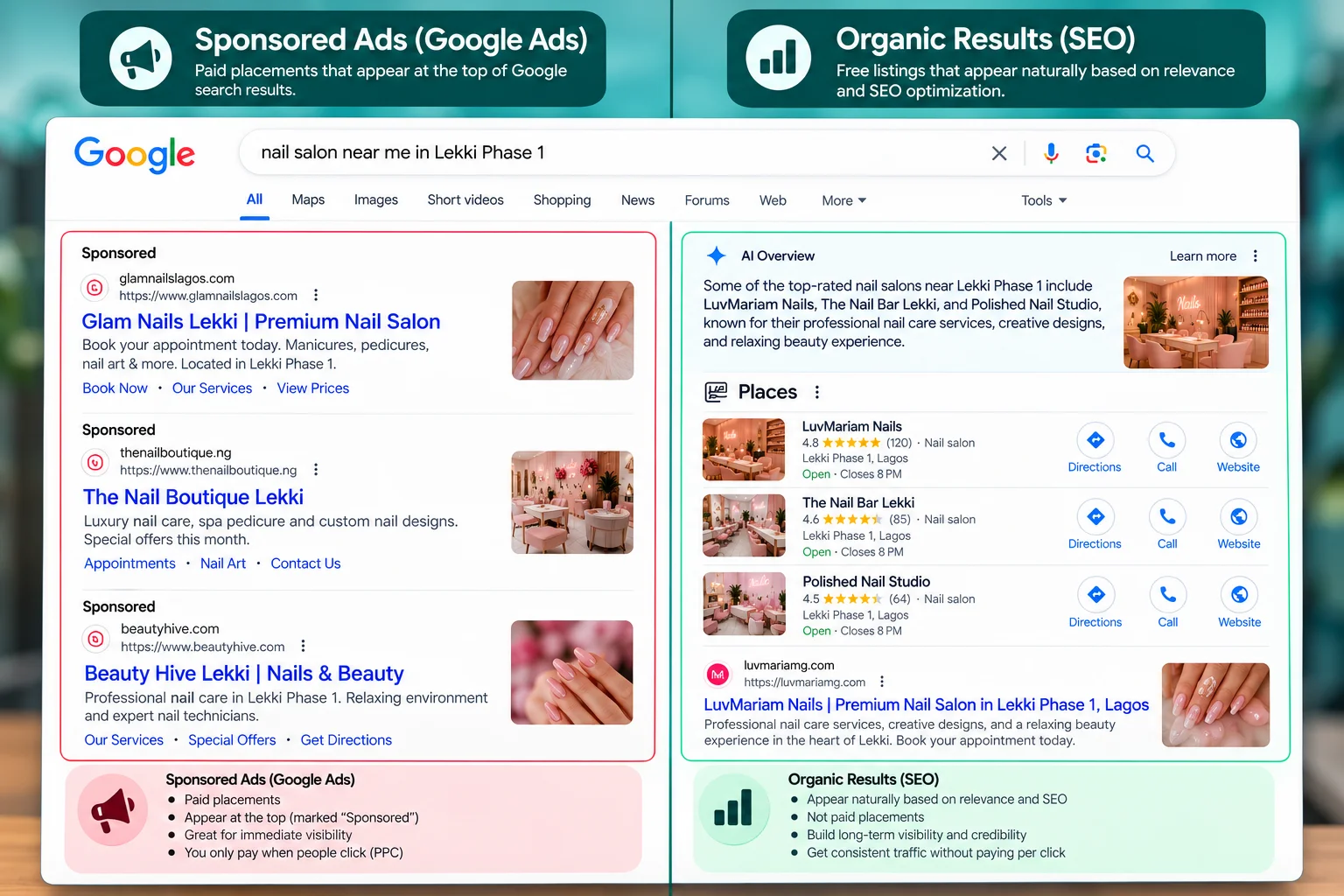
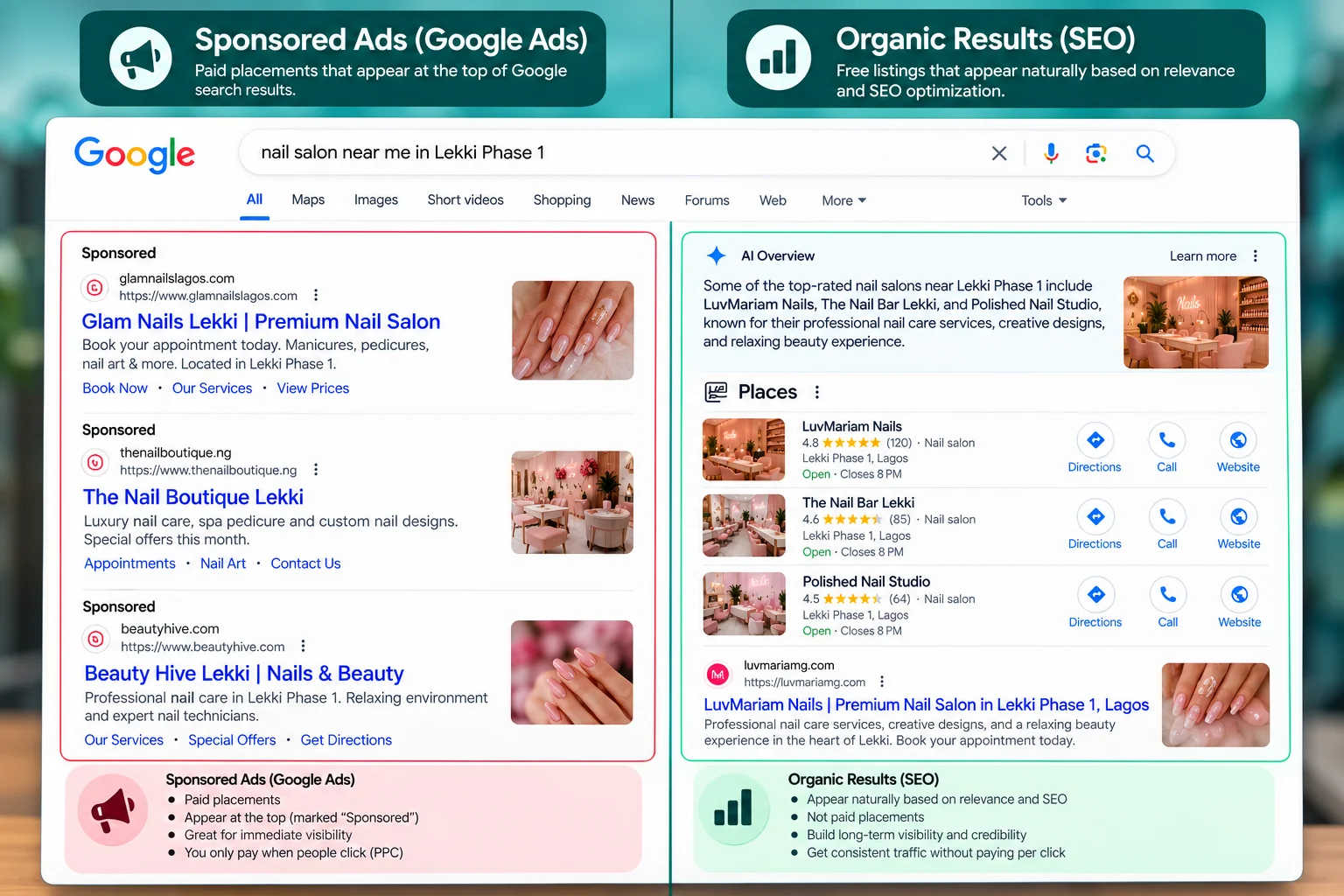
Google Ads and SEO both put your business in front of people searching on Google, but they work in very different ways. Google Ads gets you to the top of the results almost immediately, and you pay each time someone clicks. SEO (search engine optimisation) earns you a place in the free, organic results, which takes longer to build but keeps bringing in visitors without a cost per click.
For most UK small businesses the best answer is not one or the other. Use Google Ads when you need enquiries quickly or want to test what sells, and invest in SEO for lasting visibility that lowers your reliance on paid clicks over time. The right balance depends on your budget, how quickly you need results and how competitive your market is.
How Google Ads works
With Google Ads, you choose the searches you want to appear for, write ads and set a budget. When someone searches and clicks your ad, you pay for that click. The price of a click depends on how many other businesses are competing for the same searches and how relevant your ad and landing page are.
Strengths of Google Ads:
- Speed. Campaigns can start showing on the same day they are approved.
- Control. You choose the searches, locations, times of day and daily budget.
- Testing. You can quickly learn which services, offers and messages bring enquiries.
- Measurable. With conversion tracking set up properly, you can see which clicks turned into calls, forms or sales.
Limitations:
- Visibility stops as soon as you stop paying.
- Competitive industries can have expensive clicks.
- Badly set-up campaigns can spend money on irrelevant searches very quickly.
How SEO works
SEO improves your website and online presence so Google ranks your pages higher in the organic results. That includes technical work (speed, mobile experience, how Google crawls your site), content (helpful pages that answer what customers search for), local SEO (your Google Business Profile and reviews) and authority (mentions and links from other reputable sites).
Strengths of SEO:
- Lasting results. Pages that rank well can keep bringing visitors for months or years.
- No cost per click. Your ongoing costs are the work, not each visit.
- Trust. Many people trust organic results and well-reviewed local listings.
- AI visibility. The same clear, well-structured content helps you appear in Google's AI Overviews and in answers from AI assistants.
Limitations:
- It takes time. Meaningful growth usually takes several months.
- Results are not guaranteed, and Google's algorithms change.
- It needs steady effort rather than a one-off fix.
Side-by-side comparison
- Speed of results: Google Ads is immediate; SEO builds over months.
- Cost model: Google Ads charges per click; SEO costs the time or fees for the work.
- When you stop: Google Ads traffic stops; SEO results usually fade slowly.
- Best for: Google Ads suits urgent demand, launches, seasonal offers and testing; SEO suits long-term growth and building a trusted brand.
Which should you choose?
Choose Google Ads first if:
- You need enquiries this month, not next year
- You are launching a new business, service or location
- You sell something seasonal or time-limited
- Your website is new and has little search visibility yet
Prioritise SEO if:
- You want to reduce reliance on paid advertising over time
- Customers research before buying and look for helpful information
- You serve a local area where your Google Business Profile and reviews matter
- Clicks in your industry are expensive
Use both if you can. A common approach is to run Google Ads for your most profitable services while SEO builds in the background. As organic rankings improve, you can shift budget away from ads for those searches and into new areas.
How to make both work harder together
- Use Google Ads data to guide SEO. Search terms that bring enquiries through ads are often worth creating SEO content for.
- Send both to strong landing pages. A fast, clear page with one obvious next step improves ad performance and organic rankings.
- Track conversions properly. Set up Google Analytics 4 and conversion tracking so you can compare enquiries from each channel, not just clicks.
- Do not neglect your Google Business Profile. For local searches, the map results often appear above or alongside both ads and organic listings.
Frequently asked questions
Is Google Ads a waste of money for small businesses? Not when it is set up and managed well. Most wasted spend comes from broad targeting, missing negative keywords, weak landing pages and no conversion tracking, all of which can be fixed.
Will running Google Ads improve my SEO rankings? No. Paying for ads does not directly change your organic rankings. However, ads can give you useful data about which searches and messages convert, which can shape your SEO strategy.
How long does SEO take compared with Google Ads? Google Ads can bring clicks within days of launching. SEO typically takes several months to show meaningful growth, although improvements to a Google Business Profile and local listings can show results sooner.
Not sure where to put your budget?
Sundre Communications manages Google Ads and SEO for UK businesses and will tell you honestly which will bring the quickest return for your situation. Explore our Google Ads services, see our SEO, AEO and GEO services or book a free consultation.