
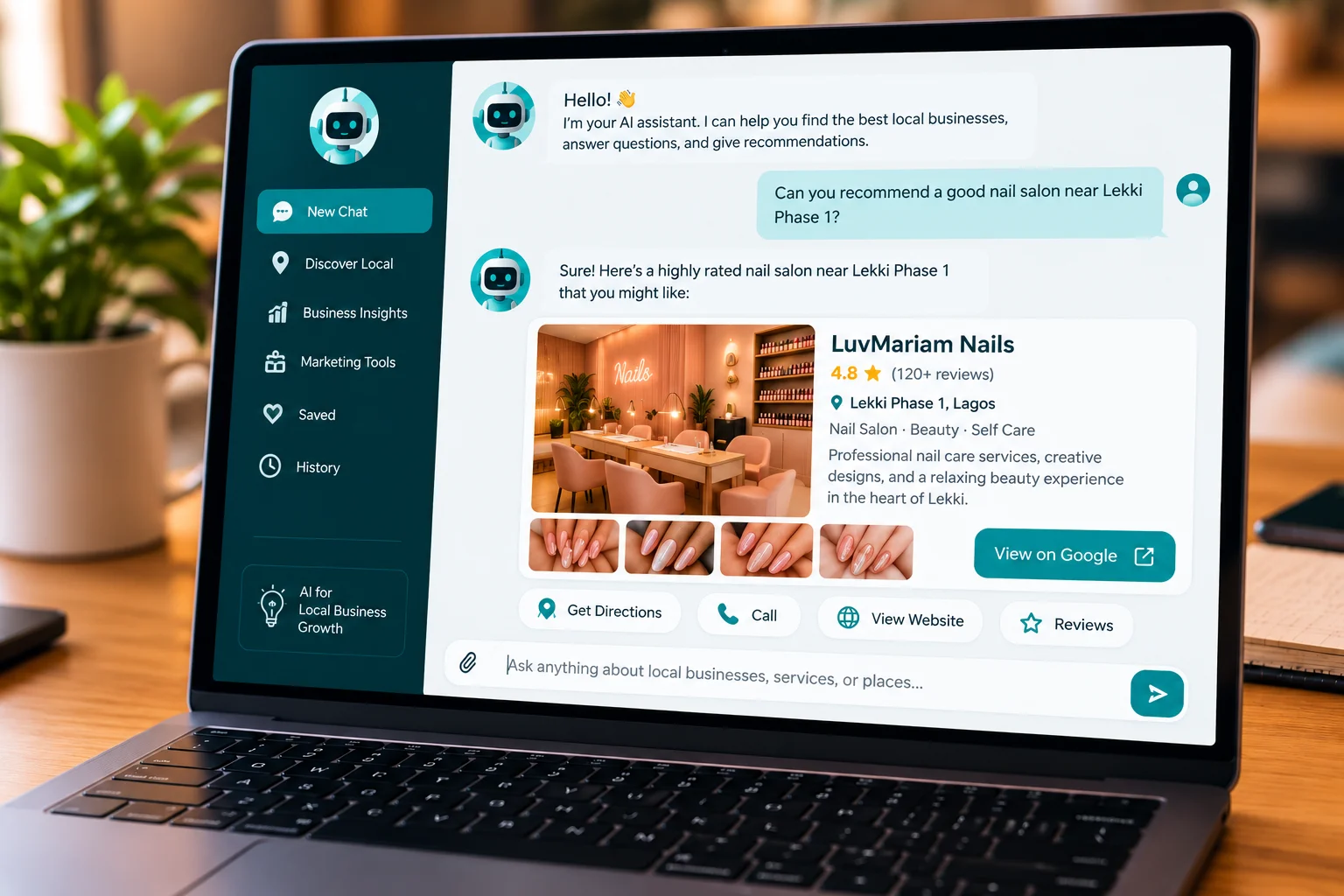
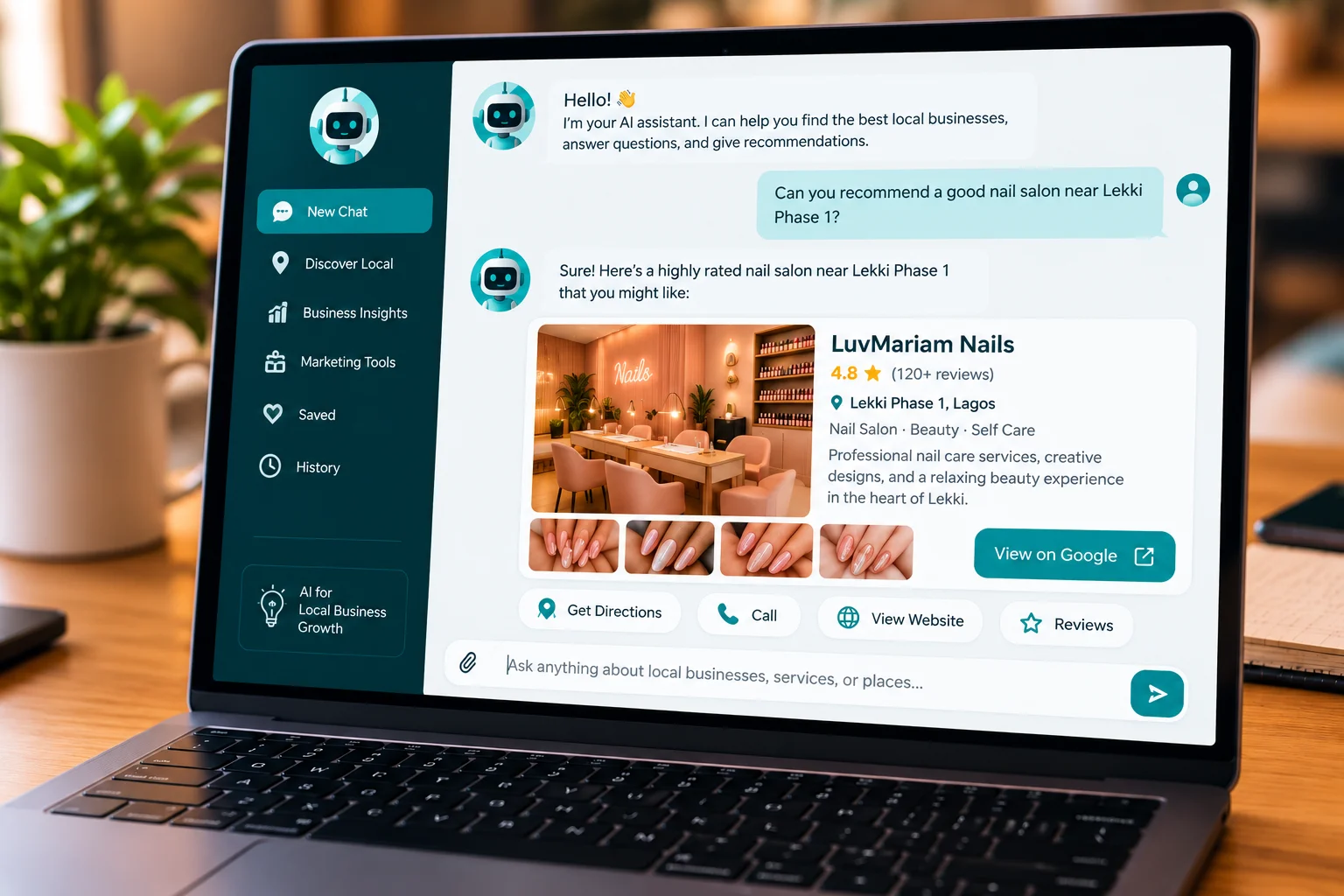
More people now ask AI assistants for recommendations instead of scrolling through search results. A question like "Who is a good accountant for a small business in Leeds?" or "Which web designers in Bristol build Shopify stores?" increasingly gets a direct answer from ChatGPT, Google Gemini, Microsoft Copilot or Perplexity. If your business is not part of that answer, you are invisible to that customer.
Getting recommended by these tools is called generative engine optimisation (GEO). The short answer to how it works: AI assistants recommend businesses they can clearly understand, verify across several trustworthy sources and match to the question being asked. Everything below is about making your business easy to understand, easy to verify and easy to match.
How AI assistants decide which businesses to mention
AI assistants do not keep a secret list of preferred companies. When they answer a question about local or specialist services, they draw on what has been published about businesses across the web, and many now search the web live before answering. In practice that means they lean on:
- Your own website, especially clear pages describing what you do, who you serve and where
- Business listings such as Google Business Profile, Bing Places, Apple Business Connect, Yell and industry directories
- Reviews on Google, Trustpilot and sector-specific sites
- Mentions on other websites, such as local news, trade associations, partner sites and "best of" round-ups
- Structured data, the behind-the-scenes code that tells machines your business name, services, location and contact details
If those sources are thin, inconsistent or missing, the assistant has little to go on and will recommend a competitor it understands better.
Step 1: Make your website say exactly what you do
Many small business websites are vague. "We deliver innovative solutions for forward-thinking clients" tells an AI assistant nothing. Compare that with "We are a family-run plumbing and heating company serving Manchester and Salford, specialising in boiler installation and repair."
For each core service, create a dedicated page that states plainly:
- What the service is
- Who it is for
- Where you offer it (towns, cities or "UK-wide")
- What it typically involves and roughly how long it takes
- How to get started
Write the most important sentence first. AI tools, like busy readers, give the most weight to clear, direct statements near the top of a page.
Step 2: Keep your business details identical everywhere
Your business name, address, phone number and website should match exactly across your website, Google Business Profile, Bing Places, social profiles and directories. Small differences, such as "Ltd" on one site and not another, or an old phone number on a directory, make it harder for machines to be confident that every listing refers to the same business.
A quick audit: search your business name and list every place it appears. Correct anything outdated, and claim any listings you have not yet claimed.
Step 3: Add structured data to your website
Structured data (also called schema markup) is code that labels the information on your pages, such as "this is our business name", "these are our services" or "these are frequently asked questions". Search engines use it to understand pages, and it helps AI systems that read your site do the same.
At a minimum, most service businesses benefit from:
- Organization or LocalBusiness markup with your name, logo, contact details and service area
- Service markup for each main service
- FAQPage markup on pages that answer common questions
If your website is built on WordPress, plugins can add some of this. Custom websites usually need a developer.
Step 4: Answer the questions your customers actually ask
AI assistants are built to answer questions, so pages that answer questions clearly are easy for them to use. Gather the questions you hear on calls and emails, such as "How much does it cost?", "How long does it take?" and "Do you cover my area?", and answer each one in two or three plain sentences on your website.
A well-written FAQ section serves three purposes at once: it helps customers, it can appear in Google's results, and it gives AI assistants ready-made answers that mention your business.
Step 5: Earn mentions and reviews from trusted sources
AI assistants weigh what others say about you, not just what you say about yourself. Practical ways to build that:
- Ask happy customers for Google reviews, and reply to every review
- Join relevant trade bodies and make sure your listing on their site is complete
- Offer expert comments to local or trade publications
- Get listed on reputable directories for your sector
- Publish useful guides that other sites want to link to
Avoid buying reviews or links. Fake reviews break the rules of review platforms, can bring penalties, and are a poor signal for AI systems that cross-check sources.
Step 6: Make sure AI crawlers can read your site
Some websites accidentally block the crawlers AI companies use, or are built so that content only appears after JavaScript runs, which many AI crawlers do not process. Check that:
- Your robots.txt file does not block crawlers such as GPTBot, ClaudeBot or PerplexityBot (unless you have chosen to)
- Your important text is in the page's HTML rather than only loaded by scripts
- Your site loads quickly and works on mobile
How to check whether AI tools know about your business
Ask a few assistants directly: "What does [your business name] do?" and "Who would you recommend for [your service] in [your town]?" Note what is accurate, what is wrong and who gets recommended instead. Repeat every month or two to track progress. Answers vary between tools and over time, so look for trends rather than single results.
Frequently asked questions
Is GEO different from SEO? GEO builds on SEO. SEO helps your pages rank in search results; GEO focuses on how AI assistants understand, describe and recommend your business. Most of the foundations, such as a fast, clear website, consistent business details and genuine reviews, help both.
Can I pay to be recommended by ChatGPT? Not in the ordinary answers. Recommendations come from what the assistant finds about your business, which is why accurate, consistent and well-reviewed information matters.
How long does it take to see results? It varies. Fixing inconsistent listings and improving key pages can make a difference within weeks for tools that search the web live, while building reviews and mentions is an ongoing effort over months.
Want help getting found in AI answers?
Sundre Communications helps UK businesses with SEO, answer engine optimisation and generative engine optimisation, from structured data and service pages to listings and review strategy. See our SEO, AEO and GEO services or book a free consultation.